Turbine Cooling & Heat Transfer
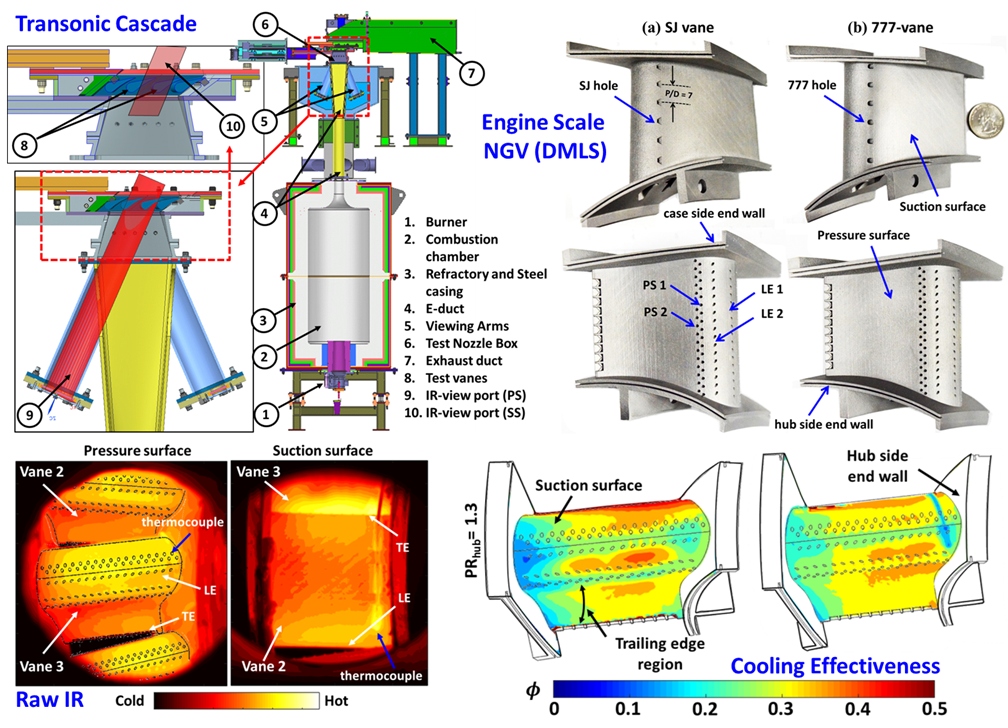
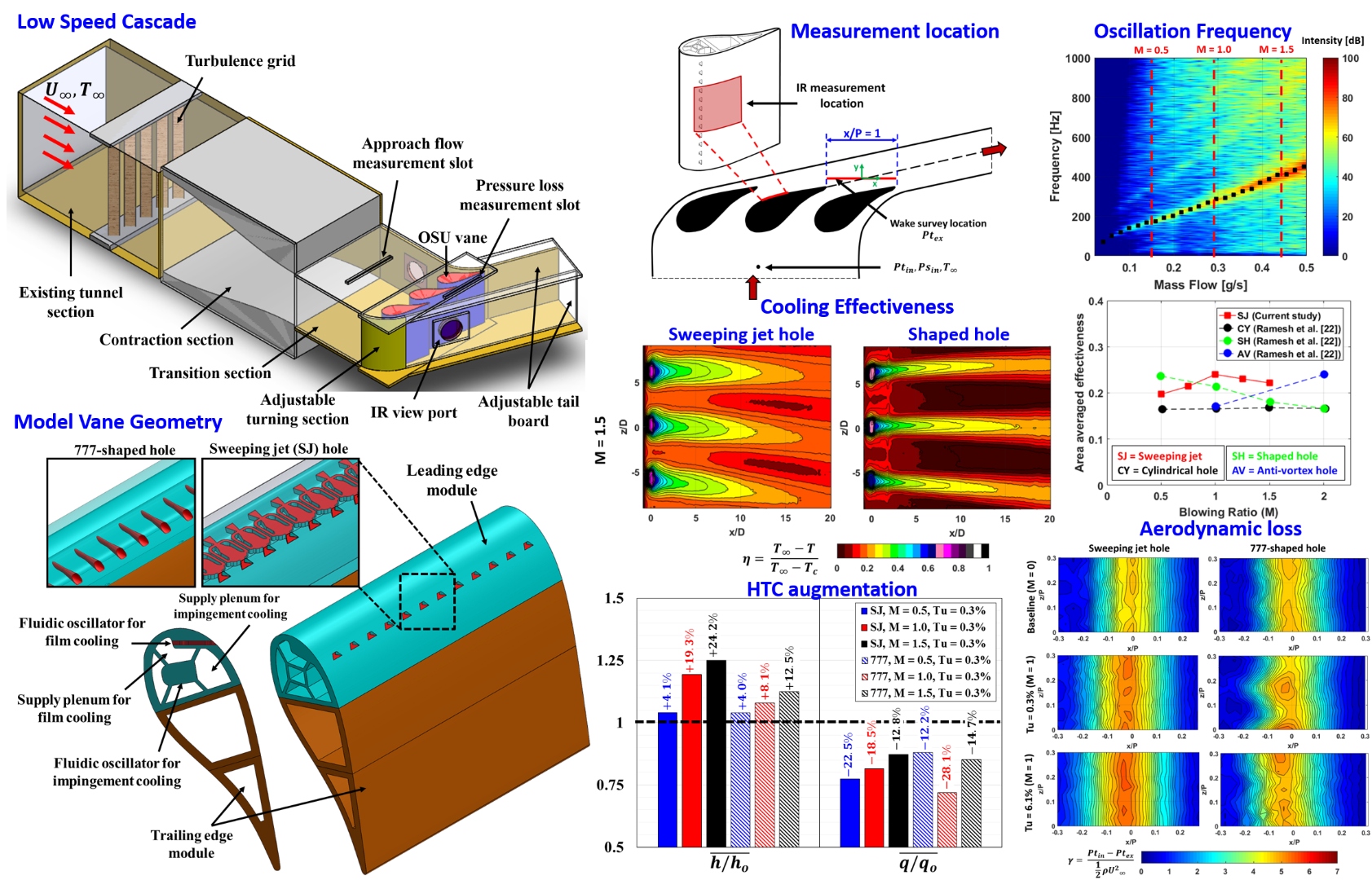
Design, validation, and fabrication via Direct Metal Laser Sintering (DMLS) of a gas turbine nozzle guide vane (NGV) incorporating three innovative cooling schemes enabled by additive manufacturing. The novel SJ-vane combines sweeping jet film cooling on the suction surface, sweeping jet impingement at the leading edge, and double-wall partial-length triangular pin-fin with impinging jet at the trailing edge. Tested at the OSU Turbine Reacting Flow Rig at engine-relevant temperature (1375 K) and Mach conditions, showing improved cooling performance vs. baseline configurations.
Hossain, M.A., Ameri, A., Gregory, J., Bons, J.P., ASME J. Turbomach. 2021; 143(5):051004. doi:10.1115/1.4049618
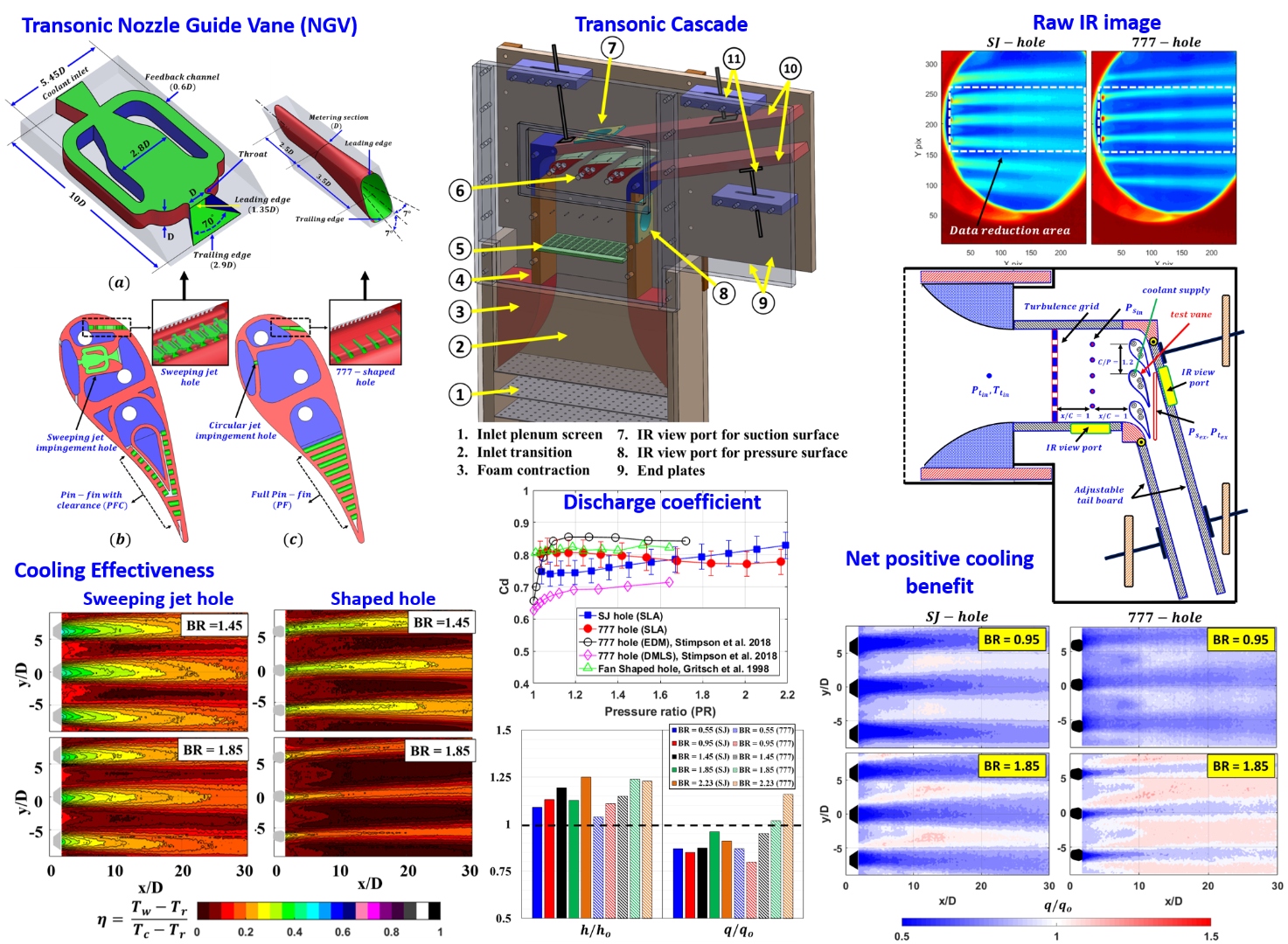
First demonstration of sweeping jet (SJ) film cooling at engine-relevant Mach number on a nozzle guide vane suction surface using SLA-fabricated transonic vane geometry. Experiments at exit Mach 0.8 and blowing ratios BR = 0.25–2.23. Heat transfer measured using transient IR and a dual linear regression technique (DLRT). The SJ hole showed wider lateral coolant spreading, improving performance at high blowing ratios (BR > 1), with comparable aerodynamic loss to the 777-shaped hole.
Hossain, M.A., Asar, M.E., Gregory, J., Bons, J.P., ASME J. Turbomach. 2019; 142(4):041009. doi:10.1115/1.4046548
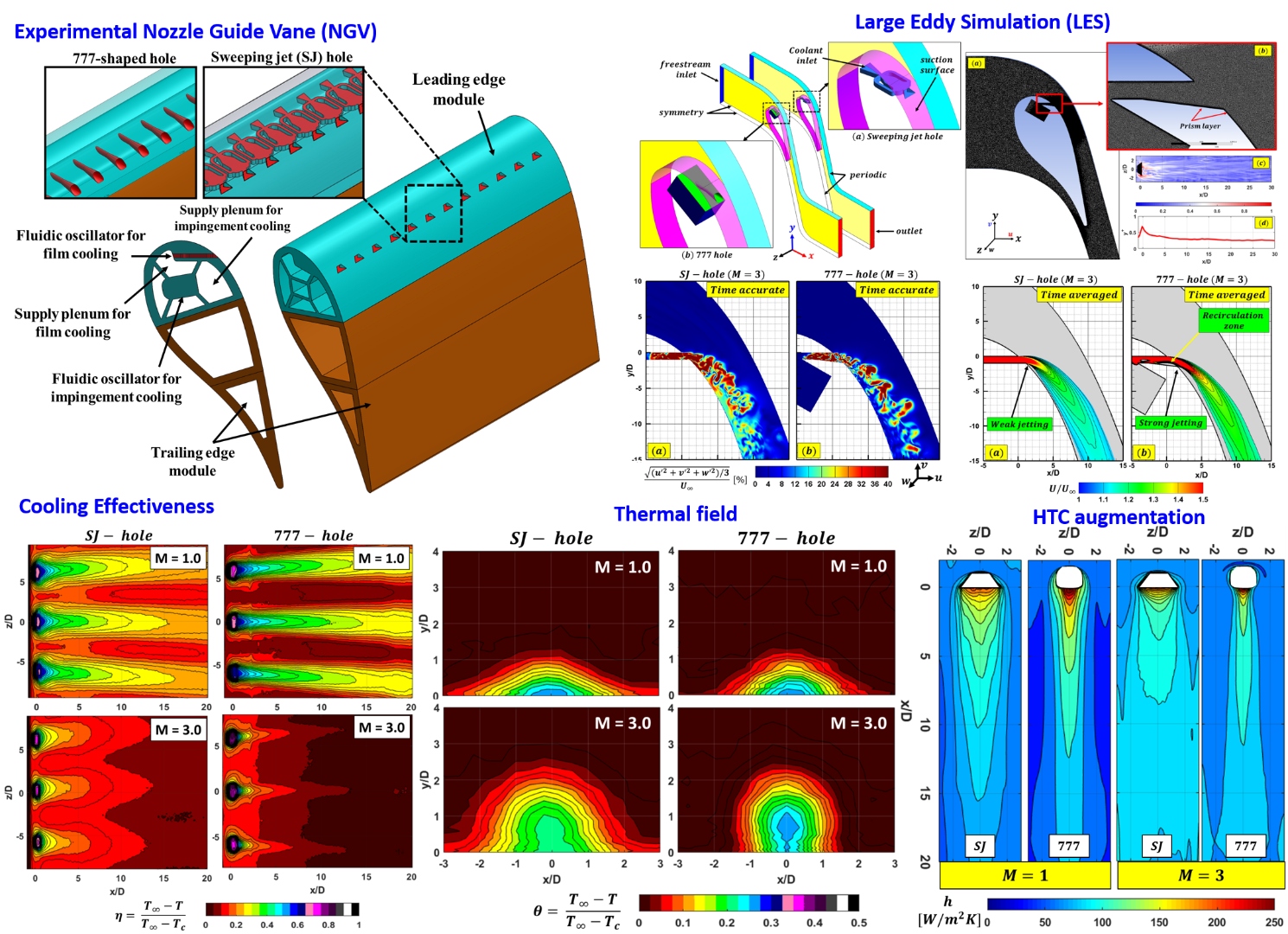
Experimental and numerical study of high blowing ratio and high freestream turbulence effects on sweeping jet film cooling (BR = 0.5–3.5, Tu = 0.6% and 14.3%). IR thermography measured adiabatic cooling effectiveness; boundary layer measurement confirmed lower jet momentum than a 777-shaped hole, keeping coolant closer to the wall. LES for both hole types revealed that the 777-shaped hole undergoes jet lift-off at high BR due to strong jetting action, while the sweeping jet does not.
Hossain, M.A., Ameri, A., Gregory, J., Bons, J.P., ASME J. Turbomach. 2020; 142(12):121010. doi:10.1115/1.4047396
Cooling performance of sweeping jet film cooling on a turbine vane suction surface in a low-speed linear cascade wind tunnel. IR thermography measured adiabatic film effectiveness at multiple blowing ratios and two freestream turbulence levels (Tu = 0.3% and 6.1%). Convective heat transfer coefficient measured by transient IR; net heat flux benefit calculated. SJ holes showed higher adiabatic film effectiveness in the near-hole region than 777-shaped holes, with a 12% total pressure loss increase at BR = 1.5.
Hossain, M.A., Agricola, L.M., Ameri, A., Gregory, J., Bons, J.P., ASME J. Turbomach. 2019; 141(3):031007. doi:10.1115/1.4042070
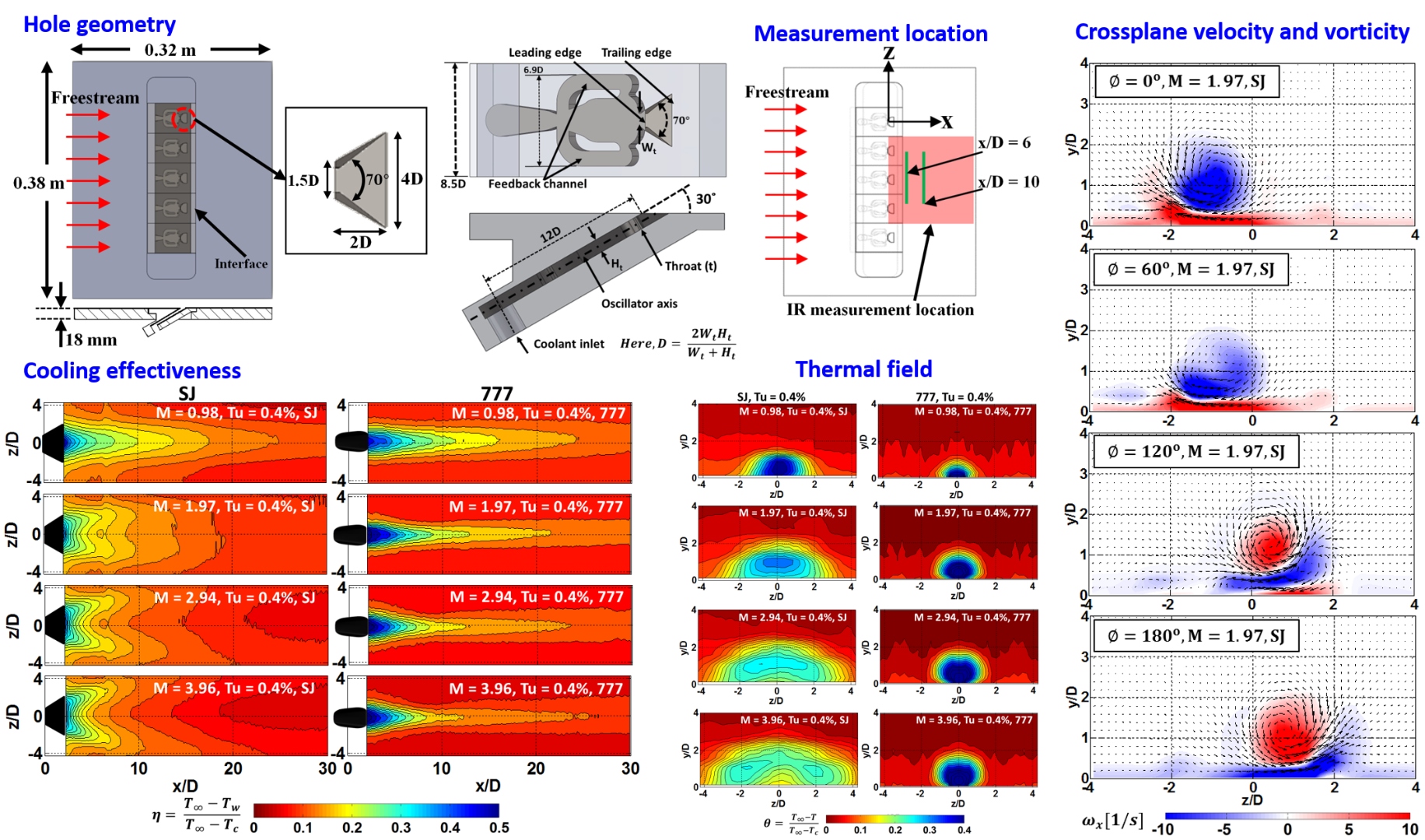
Companion experimental and numerical study of 5 sweeping jet film cooling holes (AR = 1, P/D = 8.5). Adiabatic film effectiveness, thermal field, convective HTC, and discharge coefficient measured at Tu = 0.4% and 10.1%, blowing ratios M = 0.98–3.96 (DR = 1.04). Unsteady RANS revealed two alternating streamwise vortices at all blowing ratios — opposite in rotation sense to the traditional CRVP found in steady jet-in-crossflow — the key mechanism driving lateral coolant spreading.
Hossain, M.A., Prenter, R., Lundgreen, R., Ameri, A., Gregory, J., Bons, J.P., ASME J. Turbomach. 2017; 140(3):031009. doi:10.1115/1.4038690
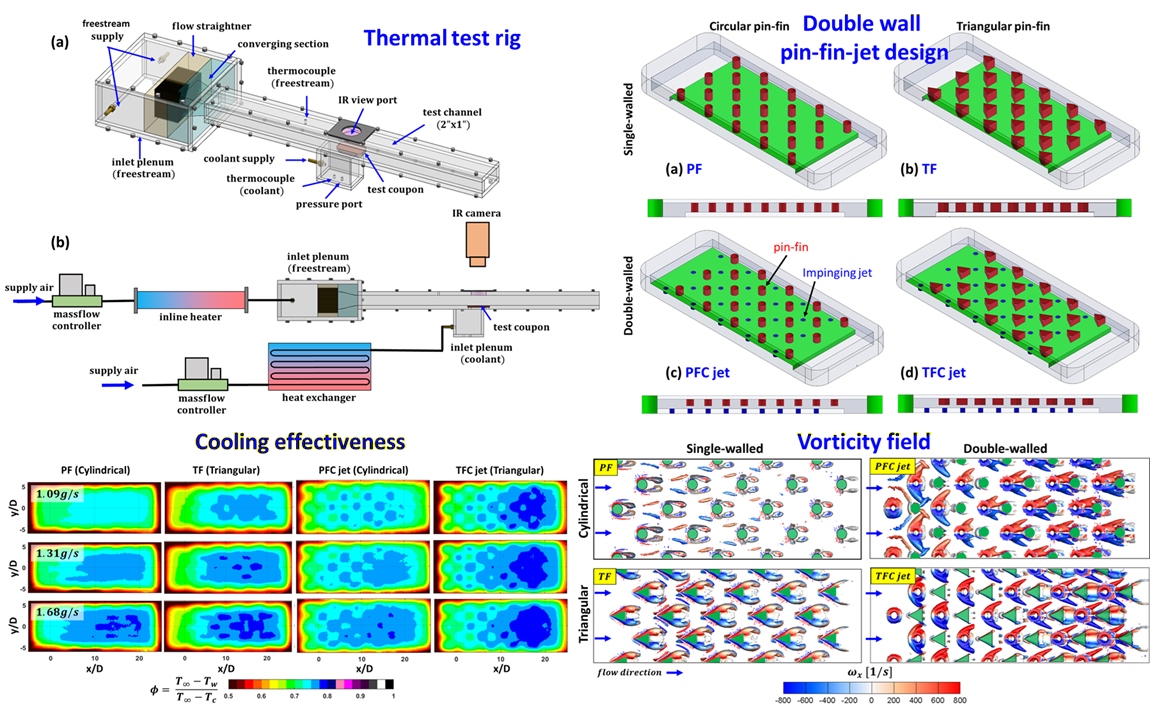
A double-wall cooling concept combining impinging jet and partial-length pin-fins for advanced gas turbine internal cooling. The impinging jet provides internal cooling while pin-fins reduce induced cross-flow and augment local heat transfer. Partial-length pin-fins recover some pressure loss penalty. Additive manufacturing enables integration of this compact design. Conjugate heat transfer simulations evaluated multiple innovative pin-fin configurations for next-generation gas turbine engines.
Hossain, M.A., Ameri, A., Bons, J.P., AIAA J. Propulsion and Power 2021; 37(4):604–614. doi:10.2514/1.B37980
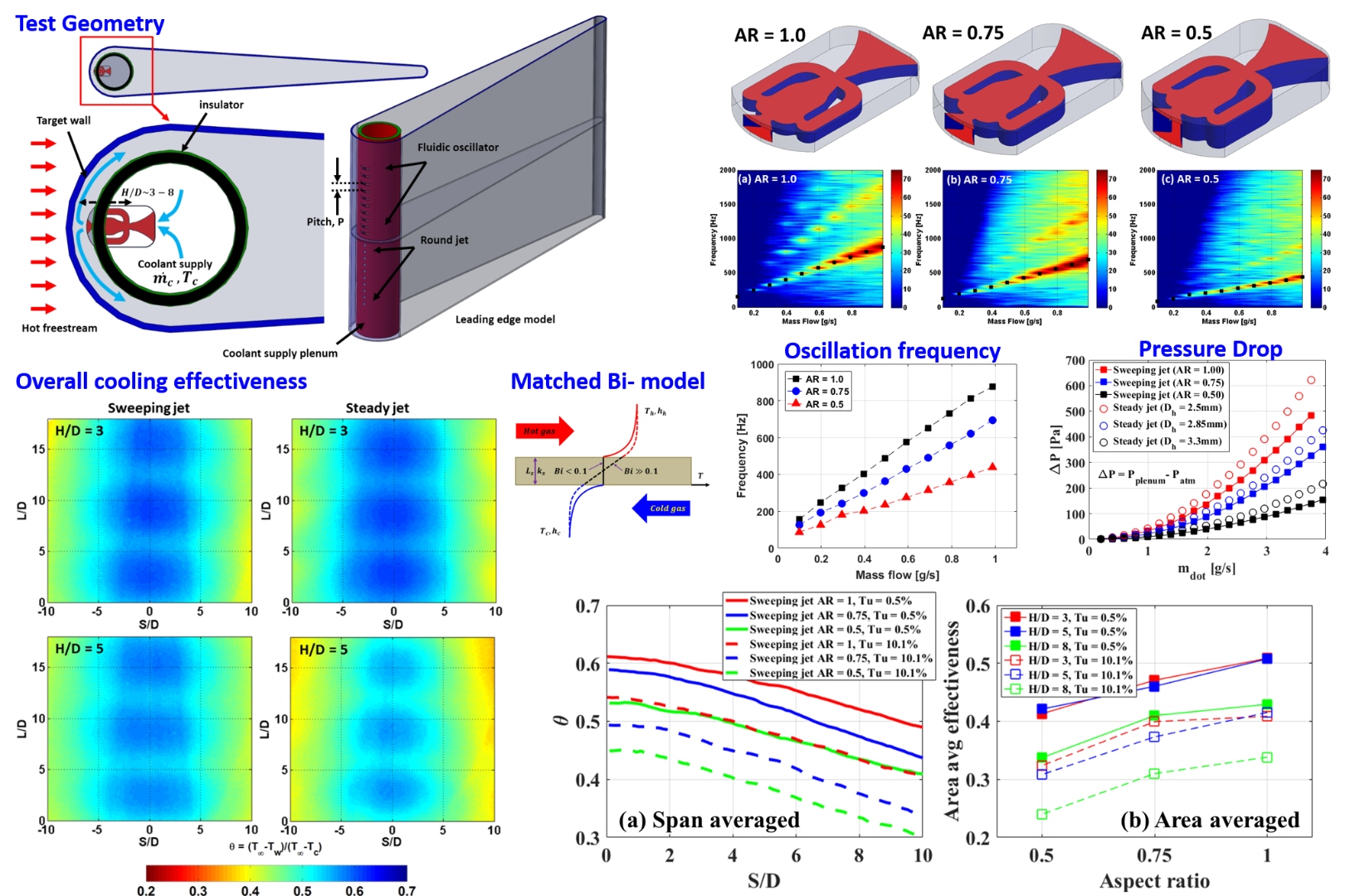
A low-speed linear cascade was used to investigate sweeping jet impingement cooling in a nozzle guide vane leading edge at engine-relevant Biot number. Both sweeping and steady jets were studied at varying mass flow rates and freestream turbulence intensities. IR thermography and a thermal inertia technique determined overall cooling effectiveness and internal heat transfer coefficients. The circular jet array provided higher overall effectiveness; sweeping jet provided a broader heat transfer profile with lower pressure drop.
Agricola, L.M., Hossain, M.A., Ameri, A., Gregory, J., Bons, J.P., ASME Turbo Expo 2018, GT2018-77073.
Experiments in a low-speed wind tunnel investigated sweeping jet impingement cooling on a faired cylinder leading edge at engine-relevant Biot number. Both sweeping and steady jets were studied at varying mass flow rates, jet-to-wall spacing (H/D), jet pitch (P/D), and freestream turbulence. At H/D = 5, the sweeping action dominates and cooling effectiveness improves significantly. High AR (unity) and tight pitch (P/D = 4) produce best performance. Sweeping jet shows smaller pressure drop than steady jet at equivalent mass flow rates.
Hossain, M.A., Agricola, L.M., Ameri, A., Gregory, J., Bons, J.P., J. Global Power and Propulsion Society 2018; 2:402–414. doi:10.22261/JGPPS.5A7OAZ
CFD, Flow Control & Fluidic Oscillators
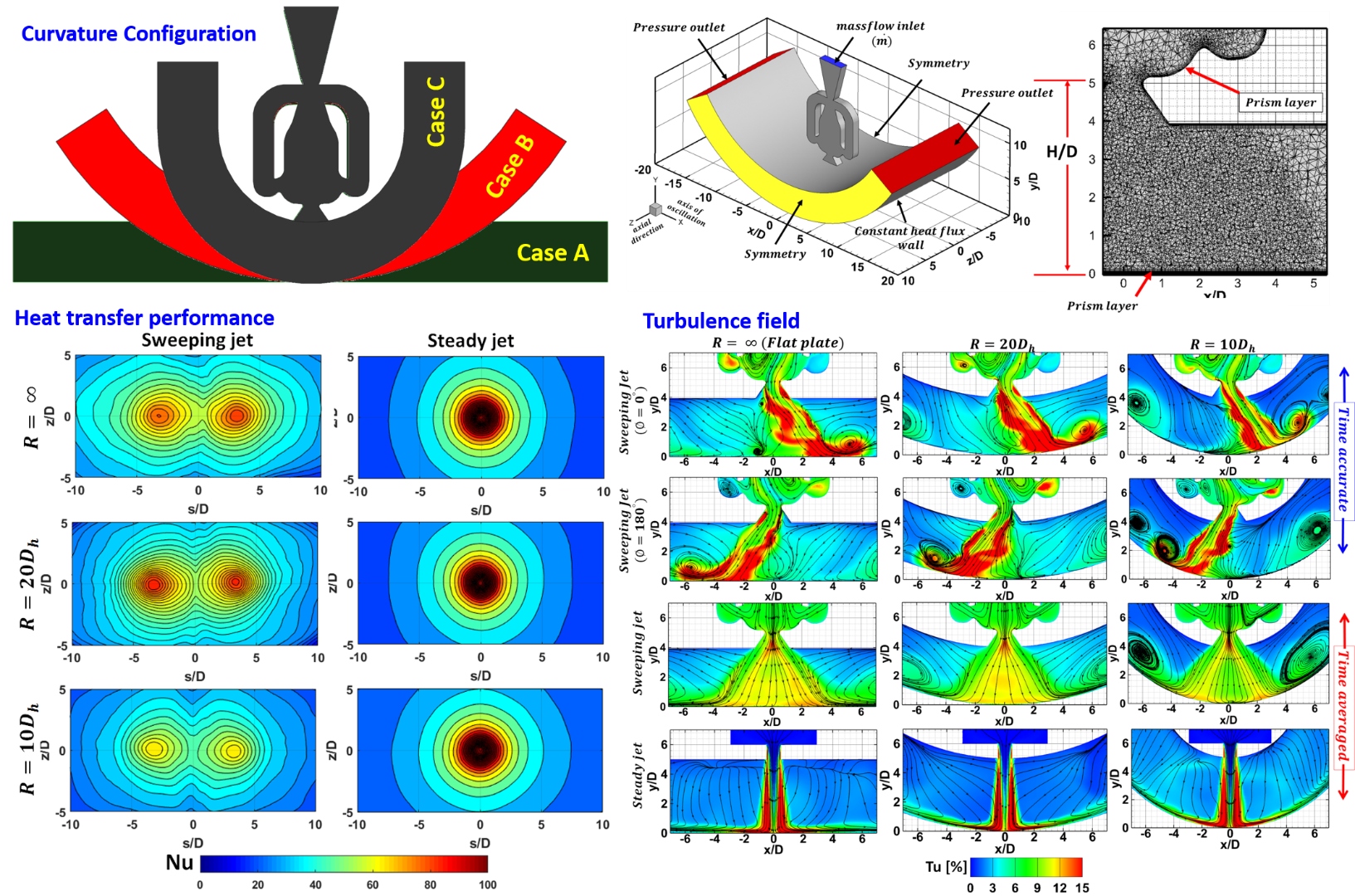
Numerical study of curvature effects on sweeping jet impingement heat transfer. Three curvature configurations (flat, R = 20Dh, R = 10Dh) were studied for both steady and sweeping jets at three jet-to-wall spacings (H/D = 3, 5, 8). Unsteady RANS validated by oscillation frequency and local Nusselt number distributions. Results show heat transfer augments with curvature for steady jets; sweeping jet shows non-monotonic behavior — best Nu-distribution at moderate curvature (R = 20Dh) where the jet remains normal to the wall during oscillation.
Hossain, M.A., Agricola, L.M., Ameri, A., Gregory, J., Bons, J.P., 56th AIAA Aerospace Sciences Meeting, 2018. doi:10.2514/6.2018-0243
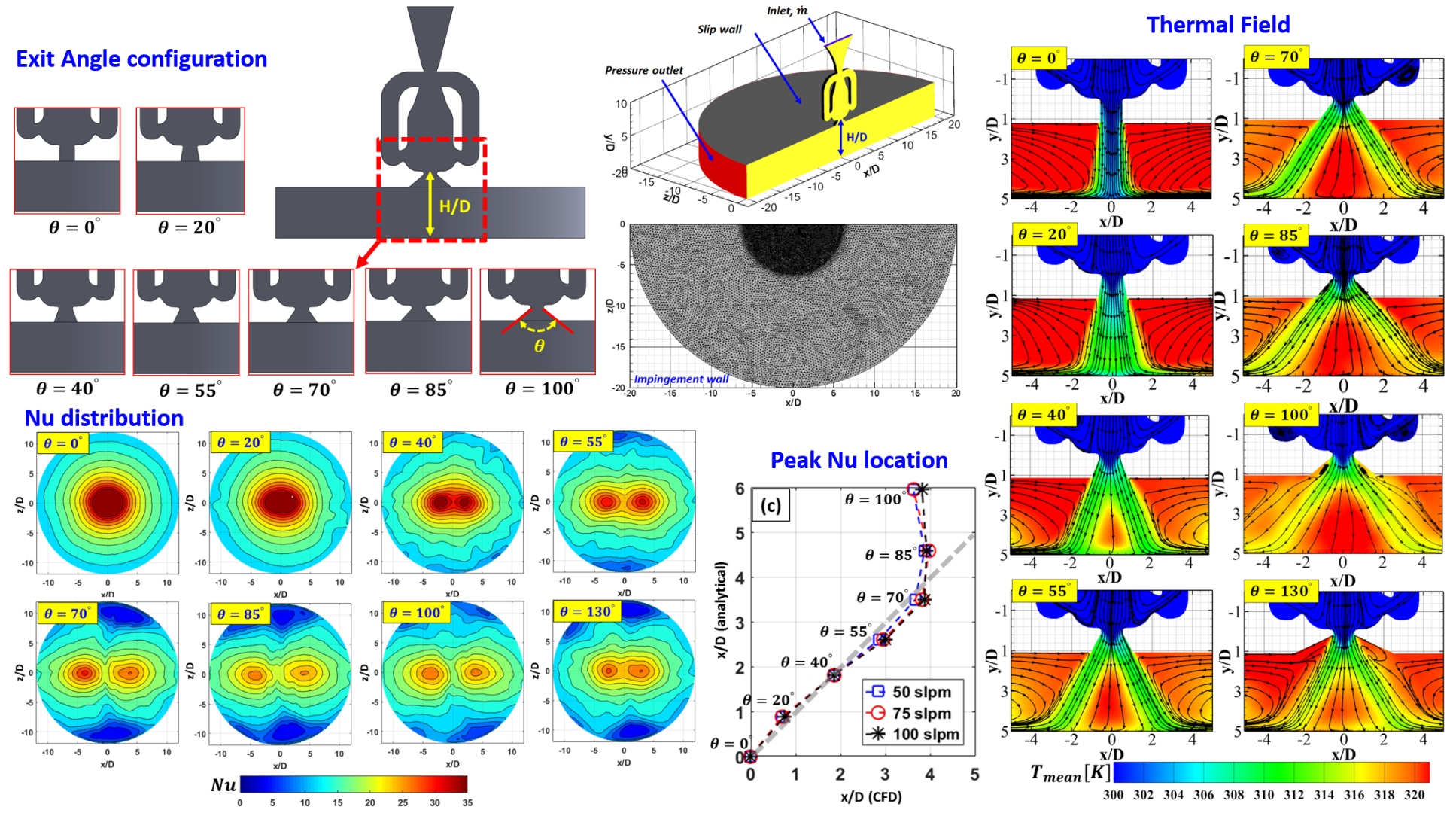
Numerical study of sweeping jet exit fan angle effects on impingement heat transfer. Eight exit fan angles were studied at three jet-to-wall spacings (H/D = 3, 5, 8) and three coolant mass flow rates. A new cooling uniformity index evaluates heat transfer distribution. Fan angle significantly affects local surface Nu distribution; sweeping action augments turbulence in the jet shear layer. Separated flow was observed at large exit angles. Discharge coefficients calculated for all exit angle configurations.
Hossain, M.A., Ameri, A., Gregory, J., Bons, J.P., AIAA Journal 2021; 59(6):2113–2125. doi:10.2514/1.J059931
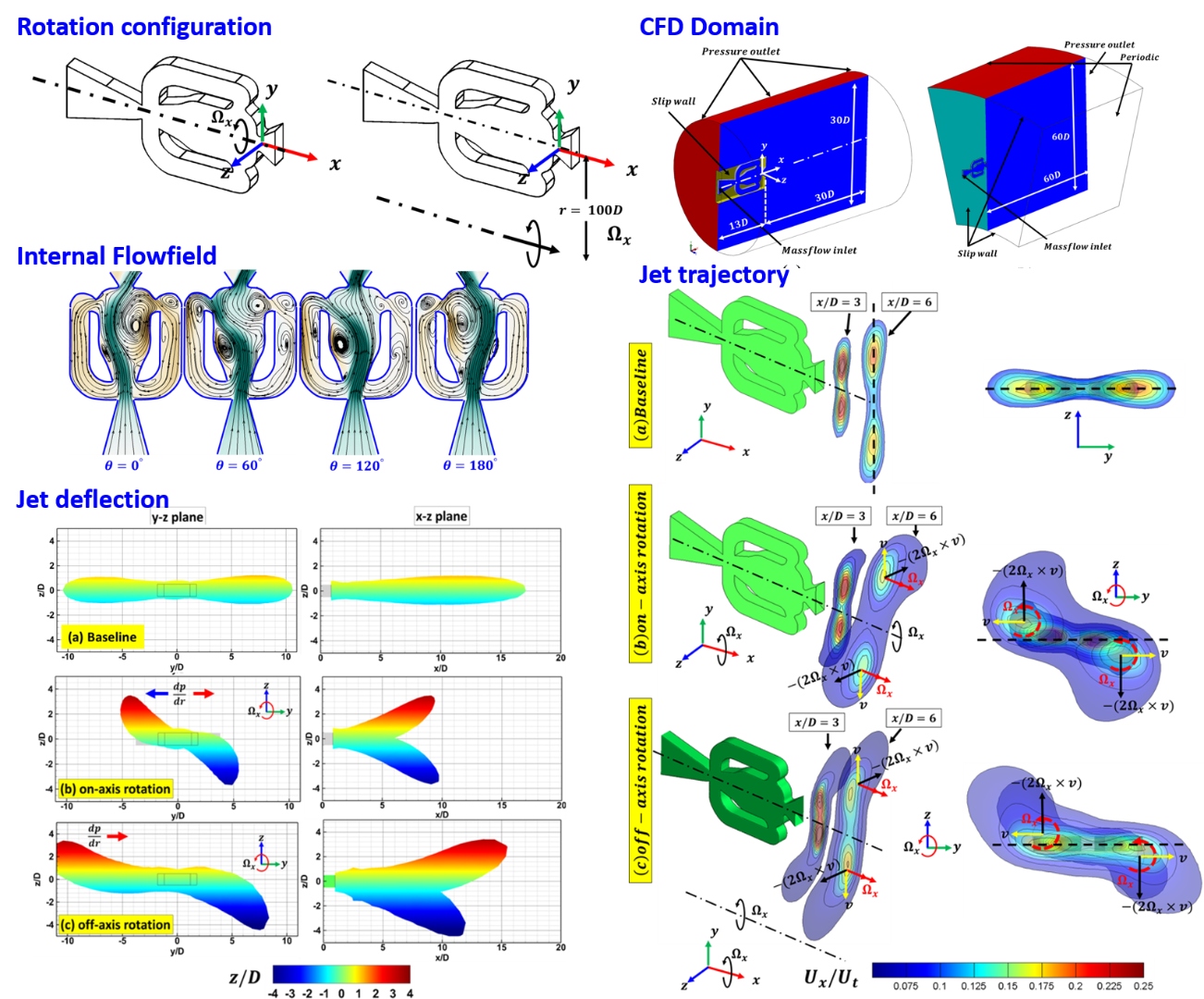
Numerical investigation of rotation effects on a fluidic actuator flowfield at 5,000–15,000 rpm (Ro = 0.013–0.039) for both on-axis and off-axis configurations. Oscillation frequency drops with rotational speed due to reduced averaged velocity in the feedback channel. On-axis rotation induces out-of-plane motion from the Coriolis force. Off-axis rotation creates a local radial pressure gradient causing asymmetric jet trajectory in both streamwise and spanwise directions.
Hossain, M.A., Ameri, A., Gregory, J., Bons, J.P., AIAA SciTech 2019, AIAA 2019-0885. doi:10.2514/6.2019-0885
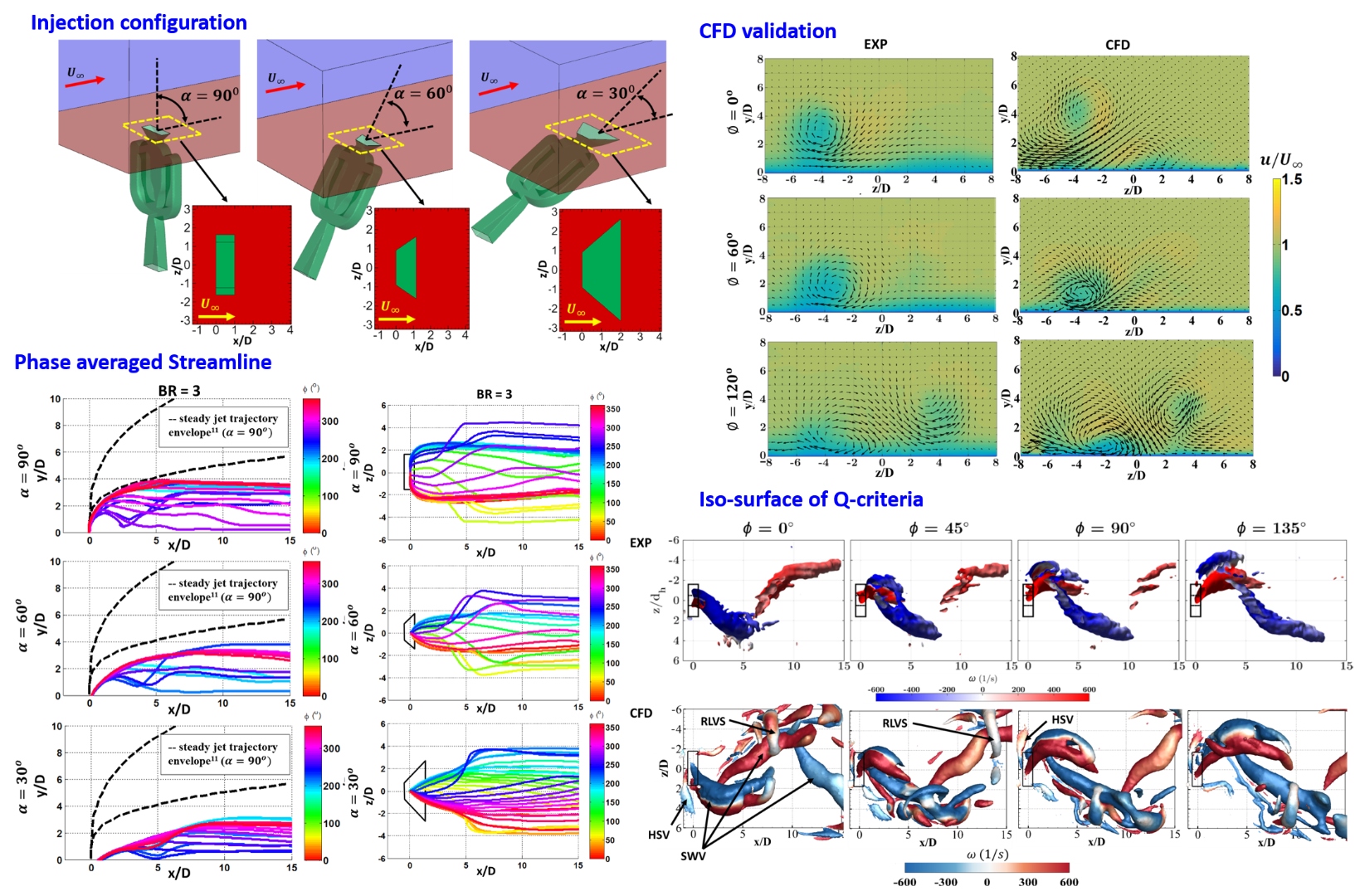
Numerical investigation of an oscillating jet interacting with crossflow at three inclination angles and three blowing ratios using Unsteady RANS. Two alternating streamwise vortices observed at all blowing ratios — opposite in rotation sense to the traditional counter-rotating vortex pair (CRVP) of a steady jet in crossflow. This reversed vortex pair is the key mechanism responsible for improved lateral coolant spreading observed in film cooling experiments.
Hossain, M.A. et al., 55th AIAA Aerospace Sciences Meeting, 2017, AIAA 2017-1690. doi:10.2514/6.2017-1690
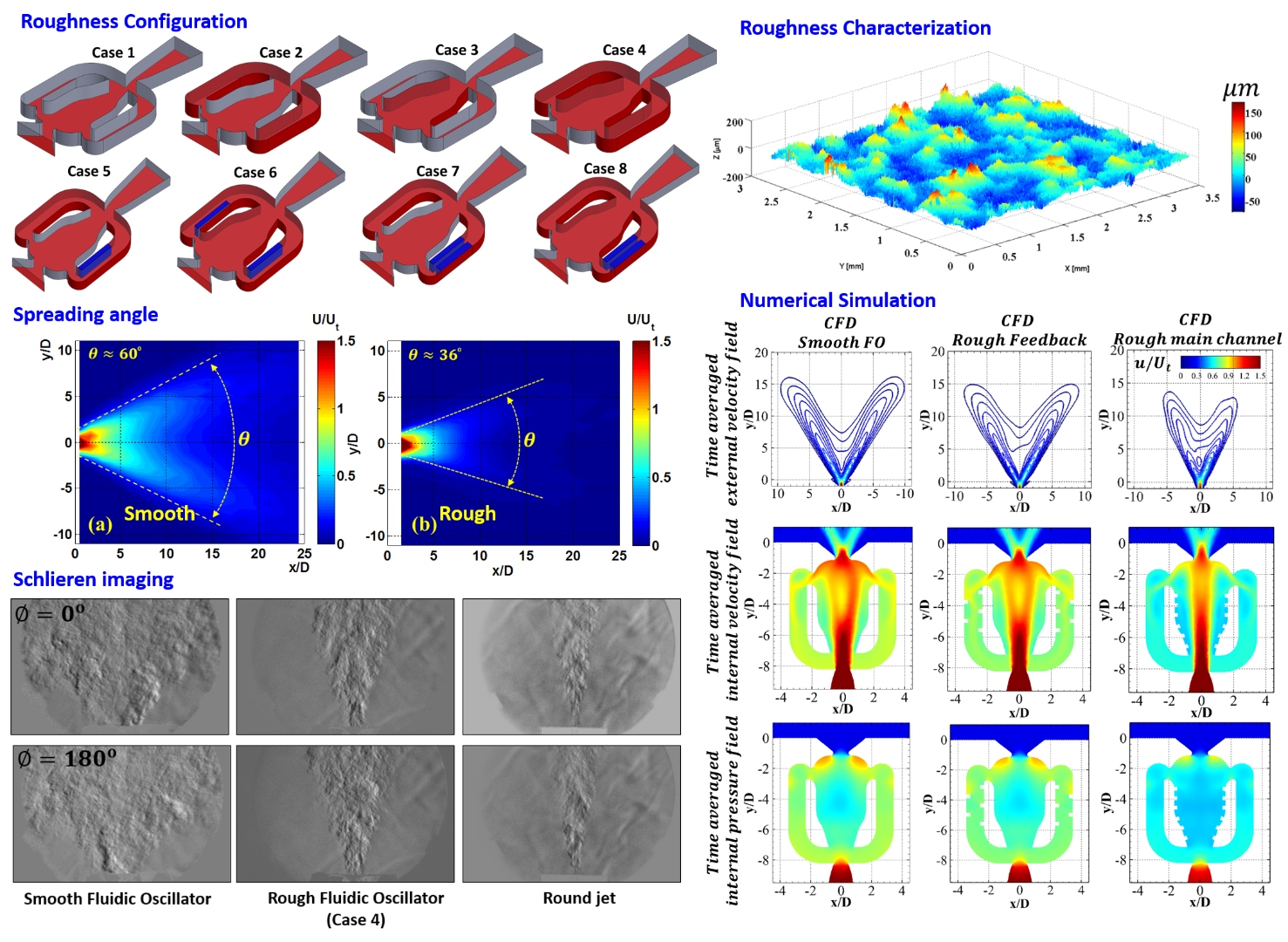
Experimental investigation of roughness effects on fluidic oscillator performance using two sandpapers (Ra = 25.28 µm, 46.54 µm) across several roughness and blockage configurations. Oscillation frequency measured by microphone; jet spreading angle by constant-temperature hotwire anemometry; external flow visualized by Schlieren imaging. Top/bottom wall roughness increases effective aspect ratio and oscillation frequency. Main channel roughness is detrimental — above a critical mass flow, blockage stops jet oscillation entirely.
Hossain, M.A. et al., 55th AIAA Aerospace Sciences Meeting, 2017, AIAA 2017-0770. doi:10.2514/6.2017-0770
Experimental investigation of freestream turbulence effects on separation control with steady vortex-generator jets (VGJs) on a highly loaded transonic LPT cascade at Mach 0.8. A spanwise row of discrete VGJs implemented at 60% chord. Higher freestream turbulence reduces VGJ effectiveness due to rapid laminar-to-turbulent transition. Higher blowing ratio also reduces effectiveness due to rapid dissipation of spanwise vortices.
Sacco, C., Hossain, M.A., Bons, J.P., AIAA Aviation 2016, AIAA-2016-4089. doi:10.2514/6.2016-4089
Combustion and Multiphase
Spatial and temporal profiles of an air puff (used to determine corneal air pressure in ophthalmology) measured by hot wire anemometry in the xy and xz planes. A photocell sensor synchronized velocity data with the Corvis ST pressure signal at 20 kHz over 81 measurement points (0–16 mm from nozzle). Demonstrated consistent velocity time history across 40 puffs and axisymmetric flow. Dynamic pressure data used to develop two novel corneal stiffness parameters.
Roberts C, Mahmoud A, Bons J, Hossain A, et al., J. Refractive Surgery 2017; 33:266–273. doi:10.3928/1081597X-20161221-03
Design and development of a combustion system for compressible, turbulent, premixed air-methane conditions with backward-facing step flame stabilization and optical accessibility via quartz windows on three sides. Preliminary flow field understanding via Detached Eddy Simulation (DES); structural integrity verified by FEA; validated by 10 kHz time-resolved PIV (TR-PIV).
Hossain, M.A., Love, N.D., Choudhuri, A., J. Mechanical Engineering Science 2017. doi:10.1177/0954406218757565
Numerical study of NOx emissions for perfectly premixed syngas combustion (CO+H₂) in a gas turbine combustor using CFD. The Eddy Dissipation model in ANSYS Fluent was used for turbulent combustion at lean equivalence ratios with a multi-tube injector. Syngas from IGCC represents a promising flexible fuel, but high hydrogen content poses challenges for NOx control.
Hossain, M.A., ASME Power Conference 2015, POWER2015-49388. doi:10.1115/POWER2015-49388
Numeric analysis of compressible flow (M = 0.8) around the NREL Phase VI wind turbine blade airfoil S809 at seven angles of attack. Shock forms just after mid-span on the top surface and before mid-span on the bottom surface at zero angle of attack, translating with angle of attack changes. k-ω SST turbulent model in ANSYS FLUENT used to determine Cp, CL, and CD coefficients.
Hossain, M.A., Huque, Z., Kammalapati, R.R., J. Renewable Energy 2013, Article ID 653103. doi:10.1155/2013/653103
Numeric modeling of aerodynamic load on a wind turbine blade and its aeroelastic effects. Blade geometry modeled with actual twist and taper data, validated against NREL Phase VI data. Aerodynamic load from CFD transferred to structural analysis — non-linear span distribution dictates skin thickness and spar shape. Aerodynamic characteristics (CL, CP) change with blade deflection, affecting power output.
Hossain, M.A., Huque, Z., Kammalapati, R.R., ASME IMECE 2013, IMECE2013-65647. doi:10.1115/IMECE2013-65647